A washing machine is designed to clean clothes efficiently while keeping noise and vibration under control. However, if your washing machine starts making loud banging, grinding, rattling, or squeaking sounds during the spin cycle, it may indicate an issue that needs attention. While some noise is normal when the drum spins at high speed, unusual or sudden sounds should not be ignored.
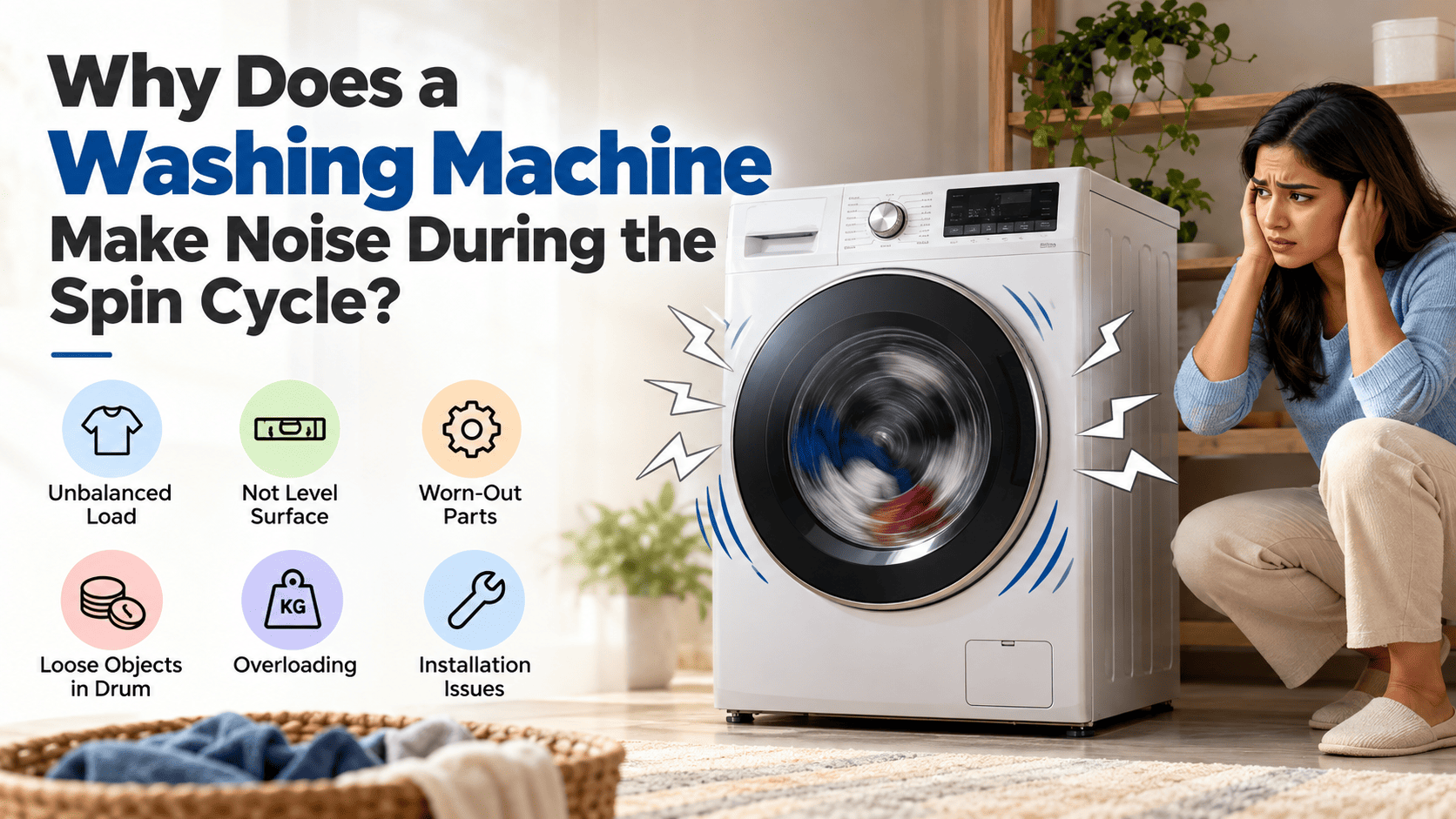
The spin cycle removes excess water from clothes by rotating the drum rapidly. During this process, an uneven laundry load, an unbalanced machine, loose components, or worn-out internal parts can cause noticeable noise. Identifying the type of sound and when it occurs can help you determine whether a simple adjustment will solve the problem or whether professional servicing is necessary.
If you are planning to buy a new washing machine, understanding these common problems can also help you compare models based on stability, motor technology, spin speed, capacity, and everyday convenience.
This guide explains why a washing machine makes noise during the spin cycle, how to identify common causes, which troubleshooting steps you can try at home, and when it may be better to repair or replace the appliance.
Why Does a Washing Machine Make Noise During the Spin Cycle?
A washing machine generally becomes noisier during spinning because the drum rotates faster than it does during the washing stage. This increases the effect of an uneven load, loose objects, vibration, and mechanical wear.
The cause often depends on the sound you hear. A loud banging noise may indicate an unbalanced load, while grinding or squealing can point to a mechanical problem.
Here are the most common reasons.
1. Unevenly Distributed Clothes Inside the Drum
An unbalanced laundry load is one of the most common reasons for a washing machine making loud noises during spinning.
When clothes collect on one side of the drum, the weight becomes uneven. As the drum accelerates, this imbalance can cause the machine to shake, vibrate, or bang against nearby surfaces.
This commonly happens when washing:
-
Heavy towels or bedsheets that clump together.
-
A single heavy blanket or bulky garment.
-
Several heavy items mixed with lightweight clothes.
-
Too few items that cannot distribute evenly around the drum.
How to fix it: Pause the cycle and wait until the drum stops completely before opening the door. Redistribute the clothes evenly and remove some items if the drum is overloaded. Restart the spin cycle and check whether the noise improves.
For example, if you are washing a large bedsheet with only a few small garments, the sheet may wrap around the other clothes and create an uneven load. Washing suitable bulky items together, without exceeding the machine's capacity, may help reduce this problem.
2. The Washing Machine Is Not Level
A washing machine installed on an uneven floor may rock or vibrate excessively during the spin cycle. Even a small difference in the height of its feet can become noticeable when the drum rotates at high speed.
This problem is particularly common after moving the appliance, installing it in a new location, or placing it on a slippery surface.
Signs that the washing machine is not level include:
-
The appliance moves forward during spinning.
-
The cabinet shakes more than usual.
-
The machine makes repetitive banging sounds.
-
The vibration becomes stronger at higher spin speeds.
How to fix it: Check whether the machine stands firmly on all four feet. Use a spirit level if available, and adjust the levelling feet according to the manufacturer's instructions. Ensure the floor is firm and stable.
Avoid placing the washing machine on an unstable platform or an uneven stack of materials. Proper installation can improve stability, reduce vibration, and prevent unnecessary strain on the appliance.
When buying a new washing machine, consider its installation requirements and available space, not just its capacity and price.
3. Loose Coins, Buttons or Other Objects
Sometimes, the noise does not come from a faulty washing machine at all. Coins, keys, metal buttons, zippers, and other small objects can create rattling or clicking sounds when they come into contact with the drum.
Small items may also become trapped around the door seal or enter areas where they should not be.
How to fix it:
-
Stop the washing machine and wait until all movement has stopped.
-
Check the drum and door seal for visible objects.
-
Inspect pockets before loading clothes for future washes.
-
Clean the accessible drain filter if your model has one, following the manufacturer's instructions.
Never reach into a moving drum or remove panels while the machine is connected to power.
If the rattling continues after removing visible objects, a loose internal component or trapped foreign object may require professional inspection.
4. Worn-Out Drum Bearings
Drum bearings support the drum as it rotates. Over time, wear, moisture exposure, or component deterioration can cause them to become noisy.
A washing machine with damaged bearings may produce a deep rumbling, grinding, or roaring sound that becomes louder as the spin speed increases.
Other warning signs may include:
-
Noise during most spin cycles, even with a balanced load.
-
Excessive drum movement or looseness.
-
Water leakage near the drum assembly.
-
A rough sound when the drum is rotated manually while the machine is switched off.
What should you do? Stop using the machine if the noise is severe, and arrange a professional inspection. Bearing replacement can involve substantial dismantling, depending on the washing machine's design.
The repair cost depends on the model, parts availability, labour charges, and whether other components are damaged. If the appliance is older and several major parts need attention, compare the total repair estimate with the cost of a replacement before deciding.
5. Damaged Shock Absorbers or Suspension Components
Shock absorbers and suspension components help control drum movement during spinning. If these parts become worn or damaged, the drum may move excessively, causing loud thumping or banging sounds.
This issue can occur in both front-load and top-load washing machines, although their suspension systems differ.
Look for these symptoms:
-
The cabinet shakes violently during spinning.
-
The drum appears to move excessively.
-
The machine repeatedly bangs against its housing.
-
The noise continues despite correcting the laundry load and levelling the appliance.
If the problem persists, contact a qualified technician. Continuing to operate a machine that vibrates violently may cause additional damage to its cabinet, hoses, or other components.
6. The Drive Belt or Motor Is Causing Noise
Some washing machines use a drive belt to transfer power from the motor to the drum. A worn, loose, or damaged belt may produce squealing, slapping, or unusual mechanical sounds.
The motor can also become noisy if its components are worn or if another part of the drive system is malfunctioning.
However, sound alone cannot confirm whether the motor or belt is responsible.
Recommended action: Check whether the machine completes the wash and spin cycles normally. If the noise persists, especially alongside a burning smell, unusual heat, or a failure to spin, stop using the appliance and arrange a professional inspection.
Do not attempt to access the belt or motor unless you have the appropriate technical knowledge and the manufacturer permits the procedure.
7. The Washing Machine Is Overloaded
Putting too many clothes into a washing machine can make it harder for the drum to distribute the load evenly. Overloading may lead to increased vibration, poor spinning performance, and clothes that remain wetter than expected.
The rated capacity, measured in kilograms, refers to the weight of dry laundry under the manufacturer's specified conditions. It does not mean every type of fabric can be loaded to that weight without considering its size and distribution.
For example, bulky blankets can occupy most of the drum even when their weight is within the rated capacity.
How to prevent it:
-
Follow the manufacturer's load recommendations.
-
Leave sufficient room for clothes to move freely.
-
Wash bulky items according to the care label and appliance instructions.
-
Avoid compressing clothes tightly into the drum.
-
Separate heavily absorbent items when necessary to improve load distribution.
Choosing the right washing machine capacity for your household can make everyday laundry more convenient. Smaller households may prefer a compact-capacity model, while larger families or households that frequently wash bedding may benefit from a larger drum.
8. Transport Bolts Were Not Removed During Installation
New front-load washing machines may include transport bolts that secure the drum during shipping. These bolts must be removed during installation according to the manufacturer's instructions.
If they remain in place, the machine may vibrate excessively, make loud banging noises, or suffer damage during operation.
If a newly installed washing machine makes unusually loud noises from its first spin cycle, check the installation documentation or contact the installer. Do not continue running the machine if you suspect the transport bolts are still fitted.
Proper installation is an important part of ensuring that a new washing machine operates as intended.
9. A Drainage Problem Is Affecting the Spin Cycle
A washing machine may also make unusual noises if water cannot drain properly. A blocked filter, obstructed drain hose, or drainage system fault may interfere with the spin cycle.
Common warning signs include:
-
Water remaining in the drum after the cycle.
-
Gurgling or unusual humming sounds.
-
The machine stopping before the final spin.
-
Clothes coming out wetter than usual.
Check the drain hose for visible kinks and consult your appliance manual for instructions on cleaning the accessible drain filter. Before opening a filter, switch off and unplug the machine, allow hot water to cool, and prepare for water spillage.
If the machine still fails to drain, a technician may need to inspect the pump or drainage system.
What Different Washing Machine Noises Can Mean
The type of sound can help you narrow down the possible cause. The following guide is a starting point, not a definitive diagnosis.
|
Noise you hear |
Possible cause |
Recommended action |
|---|---|---|
|
Loud banging |
Unbalanced load or worn suspension |
Redistribute clothes and check stability |
|
Excessive shaking |
Uneven floor, overloaded drum or suspension problem |
Level the machine and reduce the load |
|
Grinding or roaring |
Possible bearing or mechanical wear |
Stop if severe and arrange inspection |
|
Squealing |
Possible belt or drive-system issue |
Arrange a professional check |
|
Rattling or clicking |
Coins, buttons or loose objects |
Inspect the drum and accessible areas |
|
Humming with water remaining |
Possible drainage obstruction or pump issue |
Check the hose and accessible filter |
|
Loud noise from first use |
Possible installation issue |
Check the installation instructions |
How to Troubleshoot a Noisy Washing Machine at Home
Before arranging a repair, try these basic checks if the appliance is safe to operate.
Step 1: Identify When the Noise Occurs
Determine whether the sound happens during washing, draining, or only during high-speed spinning. Noise that appears exclusively at high speed may indicate load imbalance or a component affected by rapid rotation.
Step 2: Check the Laundry Load
Stop the cycle and wait until the drum has stopped completely. Redistribute tangled clothes, remove excess laundry, and restart the cycle if it is safe to do so.
Step 3: Check the Machine's Stability
Ensure the washing machine is standing on a firm, level surface. Check that it does not rock when gently tested from the outside.
Step 4: Inspect Accessible Areas
Look for coins, buttons, or other objects in the drum and door seal. Check the drain hose for visible kinks and inspect the accessible filter according to the manual.
Step 5: Know When to Stop
Stop using the appliance if you notice severe grinding, violent shaking, a burning smell, smoke, electrical symptoms, or water leaking near electrical connections. Disconnect power only if it is safe to do so, and seek professional assistance.
If basic checks do not resolve the issue, avoid repeatedly running high-speed spin cycles to test the machine.
When Should You Repair or Replace a Noisy Washing Machine?
Whether repair or replacement makes more sense depends on the machine's age, condition, warranty, and estimated repair cost.
Consider these factors before making a decision:
-
Minor problems: An uneven load, incorrect levelling, or a removable foreign object may require little or no repair expense.
-
Mechanical faults: Bearing, suspension, motor, and pump repairs may involve replacement parts and professional labour.
-
Age of the appliance: An older machine with repeated breakdowns may be less economical to repair than a newer model.
-
Warranty coverage: Check whether the fault and required parts are covered before paying for repairs.
-
Long-term running costs: If replacement is necessary, compare electricity and water consumption, capacity, expected maintenance, and purchase price.
Request a written estimate for expensive repairs. Compare the complete repair cost against the price of a suitable replacement, rather than judging the decision only by the initial service charge.
What to Look for When Buying a Quieter Washing Machine
If your current appliance is beyond economical repair, choosing a replacement with suitable features may help improve your laundry experience.
1. Motor Technology
Compare the motor type and the manufacturer's information about vibration, noise, and maintenance. Inverter-driven systems can offer more controlled motor operation, but the actual noise level depends on the complete appliance design.
Do not assume that every inverter washing machine will be quieter than every conventional model.
2. Appropriate Spin Speed
Higher spin speeds can remove more water from suitable fabrics, reducing drying time. However, faster spinning can also make vibration more noticeable when the load is uneven or the machine is poorly installed.
Choose a model with spin settings that suit your laundry habits and fabric-care needs.
3. Suitable Drum Capacity
Select capacity based on household size, laundry frequency, and the bulky items you regularly wash. A larger capacity is useful only when it matches your actual requirements and available installation space.
4. Stability and Installation Requirements
Check the appliance dimensions, levelling requirements, floor suitability, and clearance around the cabinet. Correct installation is essential for controlling vibration, regardless of the model you purchase.
5. Noise Information and Warranty
Compare any published noise ratings, warranty terms, service availability, and replacement-part support. If low noise is a priority, check the manufacturer's specifications for both washing and spinning rather than relying on general marketing descriptions.
For shoppers comparing washing machines from brands such as Akaiindia, these factors provide a more practical basis for evaluating a model than price alone.
Common Mistakes That Make Washing Machines Noisier
Avoid these habits to reduce unnecessary noise and wear:
-
Overloading the drum with clothes or bulky bedding.
-
Washing a single heavy item without following the manufacturer's load guidance.
-
Ignoring repeated banging or grinding sounds.
-
Installing the machine on an unstable floor.
-
Leaving coins and keys in clothing pockets.
-
Ignoring drainage problems or persistent vibration.
-
Continuing to use an appliance that shakes violently.
-
Attempting complex mechanical repairs without appropriate training.
Regularly checking the laundry load, keeping accessible filters clean, and following the user manual can help prevent avoidable problems.
Frequently Asked Questions
1. Is it normal for a washing machine to make noise during the spin cycle?
Some humming, motor noise, water movement, and mild vibration are normal during spinning. However, loud banging, grinding, persistent squealing, or violent shaking should be investigated because these sounds may indicate an unbalanced load, an installation issue, or a mechanical fault.
2. Why does my washing machine shake violently during spinning?
The most common causes include unevenly distributed clothes, an overloaded drum, an uneven floor, or incorrectly adjusted feet. If the shaking continues after correcting the load and levelling the appliance, the suspension system or another internal component may need inspection.
3. Why does my washing machine make a grinding noise when spinning?
Grinding may indicate worn drum bearings, a trapped object, or another mechanical problem. Stop the machine if the noise is severe or persistent and arrange a professional inspection rather than repeatedly running spin cycles.
4. Why does my washing machine make a loud banging sound with a small load?
A small load can still become unbalanced, especially when it contains a heavy towel, blanket, or bedsheet. Redistribute the items and follow the manufacturer's minimum-load guidance. If the banging continues, check the machine's stability and suspension.
5. Can overloading a washing machine cause loud noise?
Yes. Overloading can prevent clothes from moving freely and make it harder for the drum to balance the load. It can increase vibration and may contribute to wear over time. Follow the rated capacity and loading instructions for your specific appliance.
6. Is it safe to use a washing machine that makes loud noises?
It depends on the sound and its severity. A minor rattle caused by a removable object may be straightforward to resolve, but severe grinding, violent shaking, burning smells, smoke, or electrical symptoms require the machine to be stopped and inspected.
7. Does an inverter washing machine make less noise?
An inverter motor can provide controlled motor operation and may contribute to quieter performance in some models. However, overall noise also depends on drum design, suspension, spin speed, load balance, installation, and the condition of the appliance. Compare model-specific noise specifications where available.
8. When should I call a washing machine repair technician?
Contact a technician if loud noise continues after checking the load, installation, and accessible areas. Professional inspection is particularly important for grinding, suspected bearing damage, excessive drum movement, drainage faults, and repeated violent vibration.
Conclusion
A washing machine making noise during the spin cycle does not always mean that an expensive repair is necessary. Uneven laundry, overloading, an unstable floor, or loose objects can often explain the problem. However, persistent grinding, severe banging, and excessive vibration may indicate worn bearings, suspension damage, or another mechanical fault.
Start by checking the laundry load, machine levelling, and accessible areas. If the noise continues or the appliance shows signs of a serious fault, stop using it and seek professional assistance.
If you need to replace an older or frequently noisy appliance, compare washing machines based on capacity, motor technology, spin settings, noise specifications, energy consumption, warranty, and service support. Akaiindia shoppers can use these factors to evaluate suitable models and choose a washing machine that meets their household's laundry requirements.